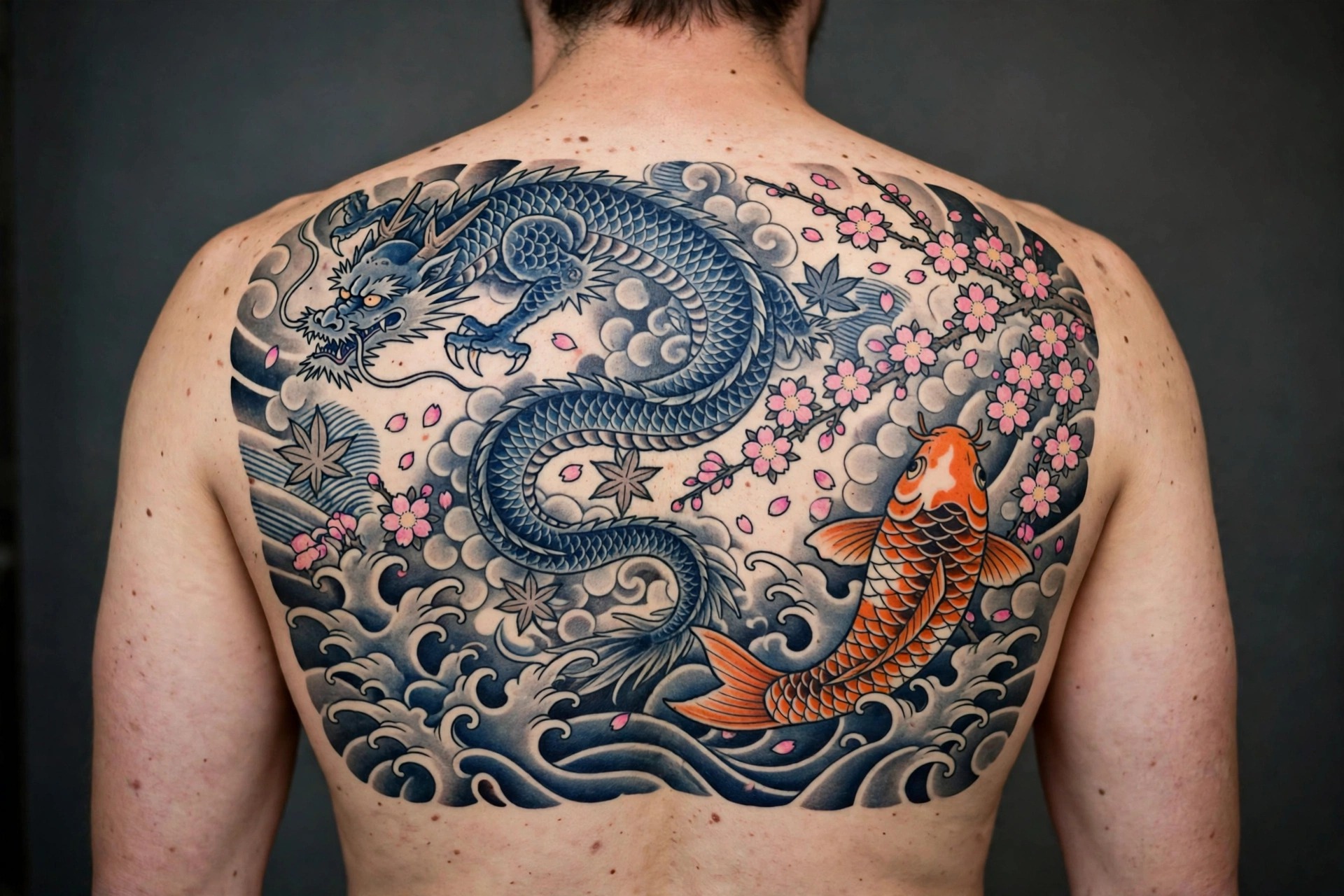
Pick a dragon for strength, a koi for luck and a cherry blossom because it looks pretty, and you have not yet designed a wabori piece. You have made a shopping list. In this tradition a motif is never just a picture. Each one carries a story, a season and a set of partners it belongs with, and a background that either supports it or fights it. This guide goes motif by motif, so each choice you make says what you meant it to say.
Tattoos4Everybody
Every motif carries something. Choose what yours carries
Read the hub guide to the style first, then use this page to choose, pair and place each element on purpose.
Key Takeaways
- A dragon carries water, wisdom and protection, and it belongs with clouds, waves and the season its flower partner sets.
- A koi carries perseverance and transformation, and direction matters: a koi climbing against the current says a different thing from one drifting down.
- Cherry blossom carries the beauty of a short life lived fully, and it is a spring flower, so it should not share a panel with autumn leaves.
- Peony carries wealth, honor and a quieter kind of bravery, and it softens fierce subjects without weakening them.
- Pairing rules are the real design: one hero motif, one supporting flower in the right season, and a background that tells the same weather story.
Table of Contents
- How to read a motif before you choose one
- The dragon: water, wisdom and protection
- The koi: perseverance and transformation
- Cherry blossom: a short life, fully lived
- Peony: wealth, honor and softened strength
- Tiger, phoenix and the supporting cast
- Pairing rules: which motifs belong together
- Season rules: the mistake that breaks a piece
- Background rules: clouds, waves and wind
- Color and placement for each motif
- Our view
- Frequently asked questions
How to read a motif before you choose one
Start with the problem most people bring to a consultation: they chose pictures they liked and discovered later that the pictures disagreed with each other. One flower bloomed in spring, another leaf fell in autumn, the hero animal faced the wrong way, and the background told a third story entirely. The piece still looked busy and expensive. It just did not read. The fix is to read a motif the way the tradition reads it, on three levels at once, before any drawing starts.
The first level is story. Every major motif arrives with a tale or a body of associations behind it, built up through prints, paintings and objects over a very long time. The collections behind the V&A woodblock article show how those subjects circulated as pictures of heroes, creatures and seasons long before they settled onto skin. When you choose a motif, you are borrowing its story whether you know the story or not, so the practical move is to know it.
The second level is season. In Japanese visual culture, flowers and many creatures are tied to a time of year, and mixing seasons in one panel is read as a mistake, not as variety. The British Museum Flora Japonica exhibition is built entirely around that idea, presenting floral prints through the four seasons and the meanings each bloom carries in its own months. A wabori panel follows the same discipline.
The third level is partnership. Motifs are rarely alone in a finished piece. A hero subject is paired with a flower, set against a background, and sometimes balanced by a second creature. Those partners are not decoration added at the end. They qualify the hero, the way an adjective qualifies a noun. Our hub guide to wabori tattoo covers the style as a whole, and the terminology guide to horimono, wabori and irezumi sorts the words, while this page stays on the motifs themselves and the rules that connect them.
The dragon: water, wisdom and protection
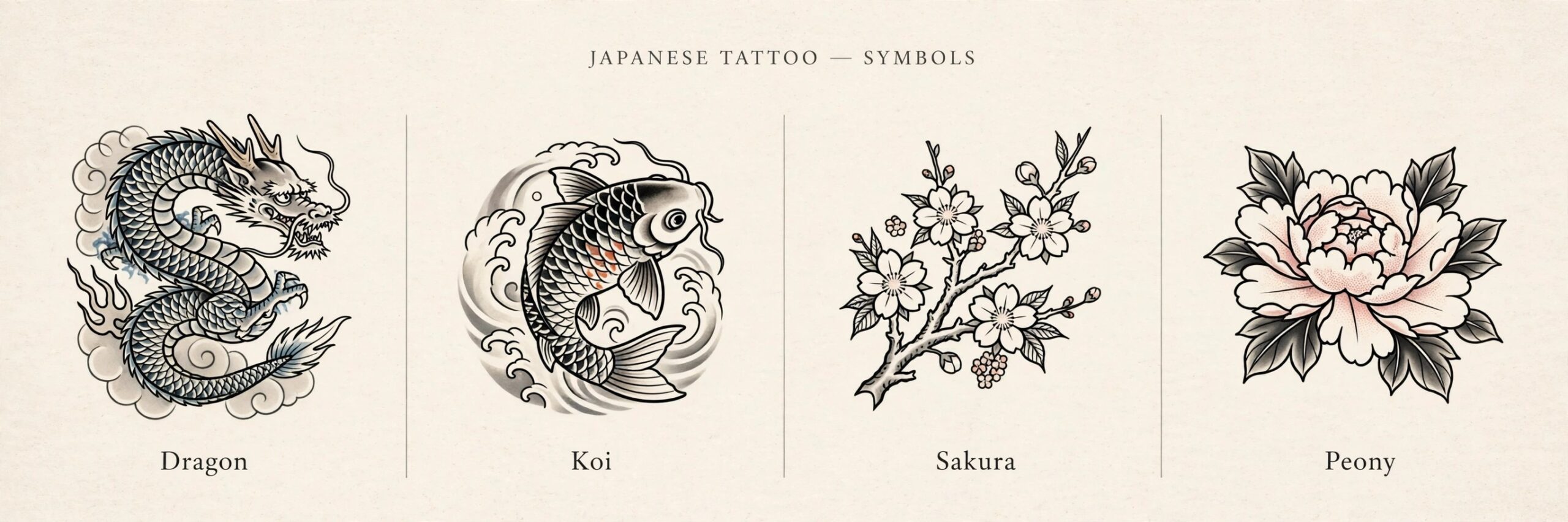
The dragon is the heaviest motif you can choose, in every sense, so it earns the first and longest look. In the Japanese tradition the dragon is not primarily a monster. It is a water power: a creature of rain, rivers and sea, associated with wisdom, strength and protection. The Metropolitan Museum’s record for a jewel-holding dragon describes the dragon as a cosmological symbol associated with water, often shown emerging from vapor and clouds to produce rain, holding a jewel. That single object summary contains the whole tattoo reading: water, cloud, and the wish-granting jewel the dragon guards or carries.
That water identity decides the dragon’s partners. A dragon belongs in cloud bands and wave crests, not in a dry or fiery setting, and its body should move the way water moves, coiling and turning across the panel so the composition itself flows. On a back, that usually means the dragon travels diagonally or in a broad S, head placed where the eye should land first. On an arm, it wraps, using the limb’s own spiral. A dragon drawn stiff and straight wastes the motif, because movement is part of what it means.
Details carry meaning here too. A dragon shown with its mouth open and closed, with claws, with or without the jewel, reads slightly differently in different tellings, and artists vary in how strictly they treat those codes. The honest position for a client is this: ask your artist what the details in their drawing say, because in this tradition the details are vocabulary, not ornament. The broader survey in the irezumi overview gives the tradition’s frame, and the museum object records, like that Met dragon record, show how consistent the water and cloud association is across objects and periods.
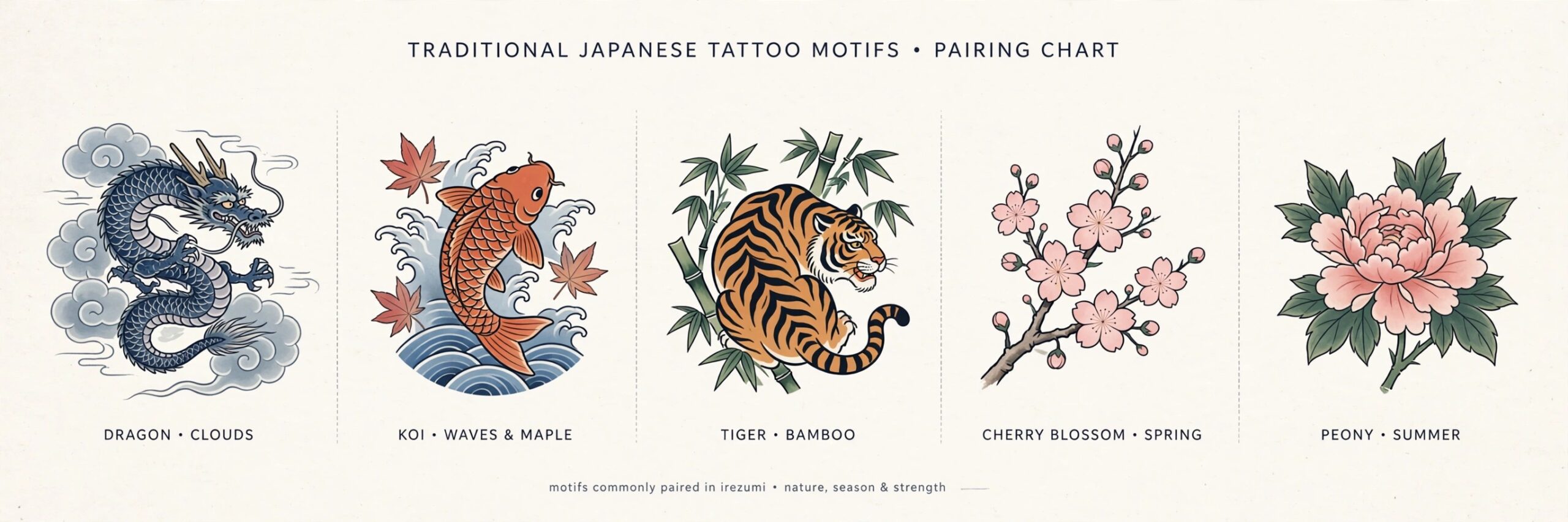
For pairing, the dragon’s classic partners are clouds and water first, then a flower that sets its season, most often cherry blossom for spring or peony for a richer, more regal register. The dragon and tiger pairing is the famous exception, a deliberate pairing of opposites, sky and earth, and it works because the tension is the point. What does not work is stacking a dragon on top of several other hero creatures at the same scale. A panel has one protagonist. Everything else is cast, weather or ground.
The koi: perseverance and transformation
If the dragon is power already possessed, the koi is power being earned, and that difference is why the koi speaks to so many people. The koi is a carp, and the dictionary entry for koi on Jisho gives that plain sense, a common carp, before any symbolism is layered on. The symbolism comes from the story the fish carries: the carp that swims against the current, climbs the waterfall, and is transformed. Perseverance through difficulty, and change as the reward for endurance, is the reading the motif brings to skin.
Direction is the koi’s grammar. A koi angled upward, against falling water, says striving: the wearer is in the climb. A koi moving downward or drifting says a different thing, closer to rest after effort or a calmer acceptance, and neither reading is wrong, but they are not interchangeable. Decide which sentence you mean before the stencil goes on, because flipping a koi is not a neutral design choice. The Cleveland Museum’s record of an immortal riding a carp shows how old and how traveled the carp’s associations are, with the fish carrying a figure through the water as a vehicle of transformation in that tradition as well.
Water is the koi’s required partner. A koi without water is a fish out of its element in the literal sense, and the waves do compositional work too, giving the body of the fish something to push against so the perseverance reads visually. The flower pairing follows the season you set: maple leaves are the classic autumn partner for koi, cherry blossom the spring partner, and mixing the two in one panel breaks the season rule covered below. Readers gathering broader first ideas can compare how this fish is treated among the subjects in free tattoo designs and meanings, where the koi appears beside many other traditions and the Japanese reading can be weighed against them.
Color choices for koi are often given meanings in popular lists, one color for love, another for prosperity, and those lists vary a great deal from source to source. Treat them as modern shop convention rather than old law. What is consistent is the story, the direction and the water. Get those three right and the color can be chosen for the skin it will live on, a question taken up in the guide to wabori on different skin tones.
Cherry blossom: a short life, fully lived
Cherry blossom is the motif people most often choose for looks and most often underestimate for meaning. Sakura, as the dictionary entry for sakura on Jisho confirms, is the cherry tree and its blossom, and in Japanese culture the flower is the emblem of spring, renewal and the fleeting nature of life. The Smithsonian’s account of sakura traditions puts it plainly: the blossoms are a symbolic flower of spring and renewal, their life is very short, and after their beauty peaks they fall. Beauty that does not last, and is loved partly because it does not last, is the whole meaning in one image.
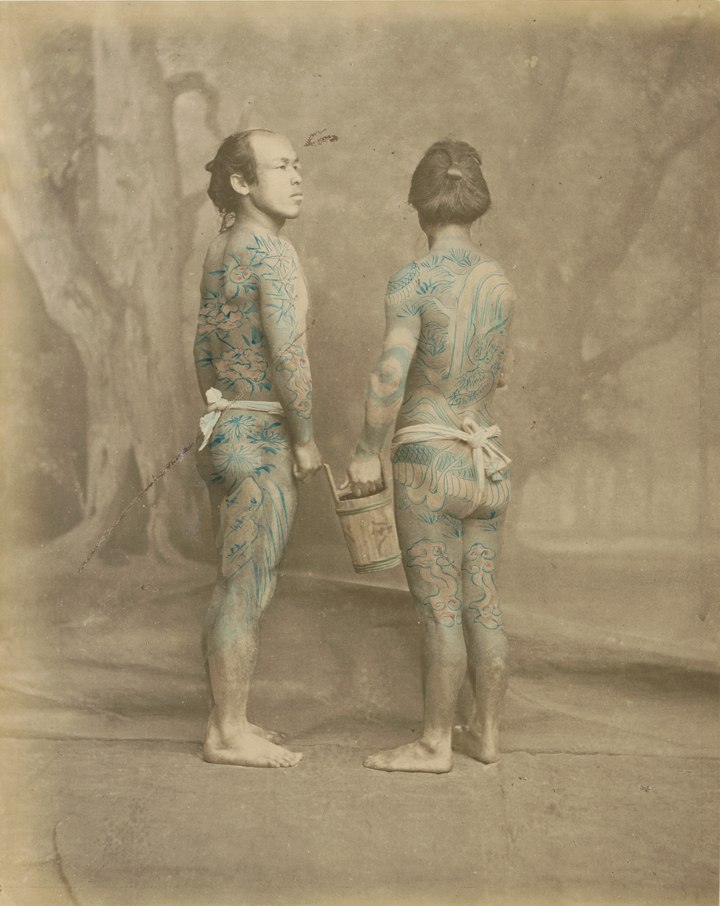
The tradition made that meaning personal very early. The Pitt Rivers Museum page on Japanese tattooing notes a print whose actors carry cherry blossom tattoos, a symbol it links to the way of the samurai: as the blossom is beautiful yet fleeting, so a life should be lived fully under the knowledge that it can end. That is why sakura pairs so naturally with warriors, heroes and dragons in tattooing. It adds mortality and grace to strength. A fierce subject with cherry blossom says power held with an awareness of time, which is a more grown-up sentence than power alone.
In design terms, cherry blossom works two ways. As a partner flower, scattered petals and a branch qualify a hero motif and set the panel in spring. As a main subject, a blossom branch can carry a smaller piece on its own, well suited to a shoulder, a forearm or an ankle, where readers browsing foot tattoo designs and ideas will find the same logic of a small motif placed where its shape fits the body. Either way, the season is fixed. Cherry blossom is spring. It does not share a panel with autumn maple, no matter how good the two look side by side on a flash sheet.
Care is part of this motif’s honesty too. Fine petal work and soft pink tones are among the first things sun and time soften, and the American Academy of Dermatology’s guide to how tattoos age explains why healed work changes and why sun protection matters for keeping color. A blossom chosen to symbolize impermanence will, fittingly, need the most deliberate aftercare of any motif in this guide.
Peony: wealth, honor and softened strength
Where cherry blossom is brief and bittersweet, the peony is full, rich and confident, and confusing the two is the most common flower mistake in wabori. The peony, botan, is traditionally read as wealth, honor, prosperity and a composed, almost regal bravery. It blooms large, holds its shape, and in prints it is treated as a king among flowers. The British Museum Flora Japonica material on floral symbolism in Japanese prints is a good reminder that each bloom in this visual language was chosen for what it says, and the peony says abundance without apology.
That register decides the peony’s partners. Peony is the classic flower for fierce and noble subjects: lions, dragons, warriors and deities, where its softness balances force without diminishing it. A hero figure surrounded by peonies reads as strength with standing, power that has arrived rather than power still striving. That is a different claim from the same hero among cherry blossom, which reads as strength under the shadow of mortality. Neither is better. They are different sentences, and choosing between them is choosing what your piece actually says.
Season discipline applies here too. The peony is a late spring to early summer flower in the traditional calendar of motifs, which makes it compatible with spring subjects in a way autumn leaves are not, and it is frequently used where a design needs a fuller, heavier flower to hold its own against a large hero motif. Small scattered petals suit cherry blossom. The peony works in full blooms, placed deliberately, often two or three carrying the floral weight of a whole panel.
For smaller work, a single peony can stand alone as a complete subject, which is one reason it appears so often in collections of free printable tattoo designs: the flower has enough internal structure, layered petals, leaves and bud, to fill a design without a supporting cast. On skin, that same structure is an advantage, because the layered petals give an artist room to build shading that will still read as the piece ages.
Tiger, phoenix and the supporting cast
Not every motif is a protagonist, and knowing the supporting cast prevents the classic error of giving every element top billing. The tiger is the dragon’s earthly counterpart: strength, courage and protection, grounded where the dragon is celestial. Shown with bamboo, the tiger gains its classic setting, the supple plant that bends without breaking beside the animal that does not bend at all. The Metropolitan Museum’s dragon and tiger scrolls preserve the pairing as a matched set, two powers held in balance, which is exactly how the tattoo tradition uses them: together by design, or apart, but rarely crowded in with a third hero.
The phoenix, the houou, carries rebirth, peace and good government in its traditional associations, a creature said to appear in harmonious times. The Cleveland Museum’s screen of peafowl and phoenixes describes phoenixes as fantastical birds said to celebrate virtuous rulers, which captures the motif’s register: auspicious, elevated and calm rather than combative. In tattooing the phoenix suits a wearer who wants transformation stated more serenely than the koi states it, and it pairs with paulownia and peony rather than with waves.
Below the heroes sits the working cast: waves, clouds, wind bars, lightning, maple leaves, pine and plum. These are not filler. Waves and clouds are the dragon’s and koi’s native weather. Pine carries longevity, plum blossom carries endurance through winter, and each addition narrows what the panel claims. The discipline, explored in depth in the guide to wabori background meaning, is that background and supporting elements are part of the sentence. Beginners comparing subjects in free tattoo designs for beginners will make better choices if they read every element that way from the start.
Pairing rules: which motifs belong together
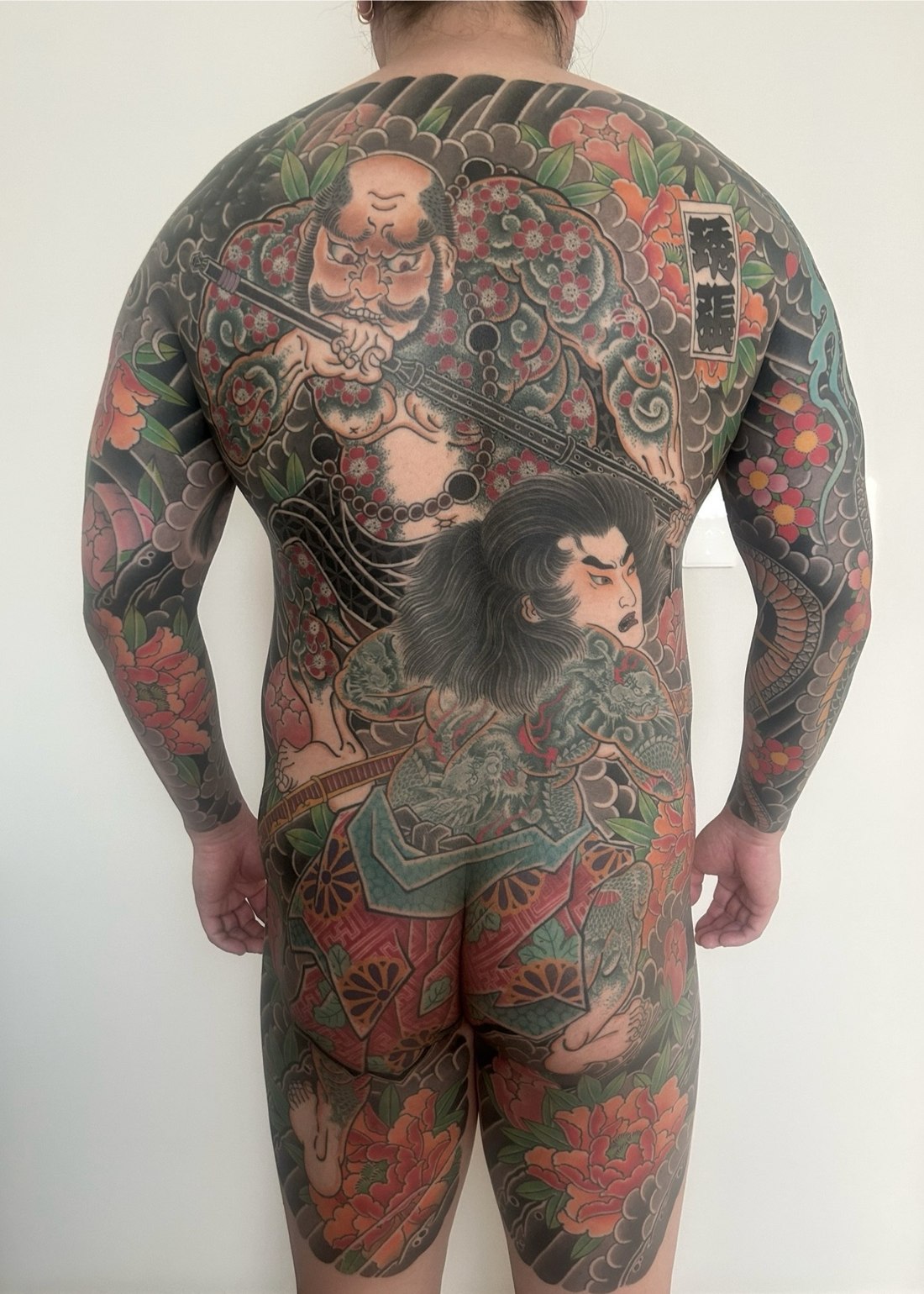
Pairing is where a collection of good motifs becomes one good tattoo, and the rules are simpler than the flash wall suggests. Rule one: one hero per panel. A back can hold a dragon, or a koi composition, or a hero figure. It cannot hold all three at full scale without each one demoting the others into clutter. If two heroes genuinely belong in your story, give them separate panels, a back and an arm, or a deliberate balanced pairing like dragon and tiger where the opposition is the design.
Rule two: the flower qualifies the hero, so choose the flower that says the qualifying word you mean. Cherry blossom qualifies with transience and grace. Peony qualifies with wealth, honor and arrived strength. Maple qualifies with autumn and change. Plum qualifies with endurance. The V&A woodblock prints that supplied this tradition its reference library follow the same grammar, with heroic and folk subjects set among the plants that comment on them.
Rule three: creatures stay in their element. Water creatures get water or cloud backgrounds. Land creatures get their plants and ground. The carp tradition behind the Cleveland carp painting record and the dragon tradition behind the Met’s records agree on this even across cultures: the setting is not scenery, it is habitat, and habitat is part of identity.
Rule four: direction and gaze are planned, not accidental. Heroes generally face inward toward the body’s center or forward in the direction of movement, koi swim in the direction their story requires, and a dragon’s head leads the composition. When you find free tattoo designs to bring to a consultation, check the direction in each reference, because a flipped reference can quietly reverse what the piece says.
Season rules: the mistake that breaks a piece
If one rule in this guide saves you from the most common wabori error, it is this one: never mix seasons in a single panel. Cherry blossom is spring. Peony follows in late spring and early summer. Maple leaves are autumn. Plum blossom is winter. A panel that scatters cherry petals over autumn maple has not created richness. It has created a contradiction that anyone fluent in the tradition reads immediately, the visual equivalent of a sentence that puts a snowstorm in July.
The reason the rule is strict is that season is meaning in this system. The Smithsonian’s sakura account ties the blossom to spring renewal and a brief, celebrated flowering, and the whole emotional charge of the motif depends on that timing. Move the flower out of its season and the charge dissipates. The same is true in reverse: an autumn koi panel with maple leaves carries a settled, reflective mood precisely because every element agrees on the time of year.
There are two legitimate ways to use more than one season. The first is across panels: a bodysuit can legitimately travel through seasons as it travels across the body, one panel per season, each internally consistent. The second is to choose the flower whose season overlaps your hero’s other elements, which is why peony is chosen so often, since its late spring timing bridges blossom season and summer subjects. What is not legitimate is mixing within the frame and calling it fusion. The tradition has a word for pieces that respect these agreements, and it is simply correct.
Planning season early also protects color decisions. Spring panels lean on pinks and fresh greens, autumn panels on reds and golds, and those palettes behave differently as they age, a practical point the dermatology guide to tattoo aging supports from the skin side. Season is an artistic rule with a practical shadow.
Background rules: clouds, waves and wind
Beginners treat background as what fills the gaps, and the tradition treats it as the weather the story happens in, which is why the same dragon looks right in one piece and stranded in another. The three working backgrounds are cloud bands, water and wind bars, often combined with the dark shading the style calls its ground. Each one belongs to certain motifs. Clouds belong to creatures of the sky and to dragons moving between realms. Water belongs to koi, to dragons in their rain-bearing aspect, and to any subject the story places in rivers or sea. Wind, shown as sweeping bars and scattered petals or leaves, belongs to scenes in motion and to blossom being carried, which is itself a meaning: beauty on the move, already leaving.
The Pitt Rivers irezumi page shows, in its account of full-body work, how completely the traditional piece commits to this: the designs are expansive, the whole body is the canvas, and the background is what turns separate motifs into one garment of imagery. That is the standard a back piece is judged against. The dedicated guide to wabori background meaning goes deeper on each background type, and it is worth reading before a large piece is drawn.
Background also does the unglamorous work of connection. It carries a design across a shoulder blade, around an arm, and from one session’s work into the next, so that additions made later still belong. When comparing how line and shade divide that labor, the guide to wabori shading vs outline shows why the dark ground is drawn with the same care as the hero: in this style, the ground is half the picture.
Color and placement for each motif
The last set of decisions is physical: what colors the motif needs, and where on the body its shape works. Dragons take the large, wrapping placements, backs, thighs and full arms, because the coiling body needs room to move, and they hold deep blues, greens, blacks and reds well. Koi need a surface with a clear direction of travel, the back, the forearm, the calf or the side, and their oranges, reds, whites and blacks should be chosen against the wearer’s own tone, as the irezumi tradition overview and every healed portfolio will show you in practice.
Cherry blossom is the most flexible motif in scale. A branch can crown a shoulder, scatter across a back as a partner element, or stand alone in a small piece, and its pinks need a confident outline to survive softening. Peony needs enough room for its layered petals to open, so it suits shoulders, thighs, hips and the spaces around a hero figure, in reds, pinks and corals. Tiger needs length, a back, a thigh or an arm it can prowl along, with bamboo placed where the body bends. Phoenix needs the largest uninterrupted canvas you can give it, most often the back, because its tail feathers are the composition.
A final placement caution applies to every motif here. Designs placed over moles complicate skin checks, and the AAD guidance already cited advises planning placement with that in mind and protecting finished work from sun. Motif, season, pairing and placement decided together, in that order, is the whole method of this guide. A piece built that way reads clearly on the first day and, cared for, keeps reading for decades.
Our view
Most wabori mistakes are not drawing mistakes. They are pairing mistakes: the right dragon in the wrong season, the right koi swimming the wrong way, the right blossom scattered over the wrong leaves. The motifs themselves are generous. Each one arrives carrying a clear meaning, a season and a set of natural partners, and the wearer’s only real job is not to argue with what they carry. Choose one hero, give it the flower and the weather it belongs with, and let the piece say one thing completely. That restraint is what makes traditional work look inevitable, as if it could never have been drawn any other way.
Frequently asked questions
Can a dragon and a koi go in the same piece?
Yes, with care. The koi’s own story ends in transformation into a dragon, so the two belong to one story world and share water. The safe composition gives one of them clear hero status, most often the dragon on the larger panel with koi in the water below, rather than two equal heroes competing at the same scale.
What does it mean if my koi is swimming downward?
In popular reading, an upward koi says striving against the current and a downward koi says rest, reflection or a challenge already passed. The plain dictionary sense behind the koi entry, a carp and nothing more, is a useful anchor here: the direction, the water and the story are what turn a carp into a statement. Artists vary in how strictly they apply this, so treat direction as a real choice, discuss it with your artist, and pick the direction that matches the sentence you want the piece to say.
Can I mix cherry blossom with maple leaves for the colors?
Not in one panel, under traditional rules. The sakura entry names the cherry tree and its blossom, a spring flower, and maple is an autumn leaf, and mixing them breaks the season agreement the tradition reads as basic correctness. If you love both, put them in separate panels, or choose peony as a bridge flower whose season sits between them.
Which flower should I pair with a fierce hero or warrior?
Peony, in most cases. Its associations with wealth, honor and composed strength balance a fierce subject without softening its force. The same balancing logic governs the tiger, whose classic bamboo setting and whose balance against the dragon in the Met’s paired scrolls show how a fierce subject is held, not just displayed. Cherry blossom is the alternative when you want the piece to carry mortality and grace alongside the strength, the samurai reading, rather than standing and arrival.
Does the phoenix mean the same as the koi?
No, although both touch transformation. The koi transforms through effort, climbing against the current. The phoenix, in the tradition behind museum screens like the Cleveland phoenix screen, is an auspicious creature of harmony and good order, closer to rebirth and peace than to struggle. Choose by which kind of change you mean.
How many motifs should a first wabori piece have?
One hero, one flower and one background is a complete and traditional formula, and it is enough for most first pieces at any size. It keeps the meaning legible, the season consistent and the composition clean, and it leaves room to extend later with new panels that follow the same rules.
Keep exploring Tattoos4Everybody
The motifs are sorted. The hub guide covers the style itself: its subjects, its planning and how a full piece comes together.
Sources
- V&A woodblock article — Japanese woodblock prints (ukiyo-e), Victoria and Albert Museum
- Pitt Rivers Museum page — Body Arts: Japanese irezumi
- jewel-holding dragon — Jewel-Holding Dragon, The Metropolitan Museum of Art
- dragon and tiger scrolls — Dragon and Tiger, The Metropolitan Museum of Art
- sakura traditions — Significance of Sakura, Smithsonian Folklife Festival
- British Museum Flora Japonica — British Museum Unseen: Flora Japonica
- immortal riding a carp — Hotei with Daoist Immortals: Immortal Riding Carp, Cleveland Museum of Art
- peafowl and phoenixes — Peafowl and Phoenixes, Cleveland Museum of Art
- koi on Jisho — Jisho dictionary entry: koi
- sakura on Jisho — Jisho dictionary entry: sakura
- irezumi overview — Irezumi, general reference overview
- how tattoos age — American Academy of Dermatology