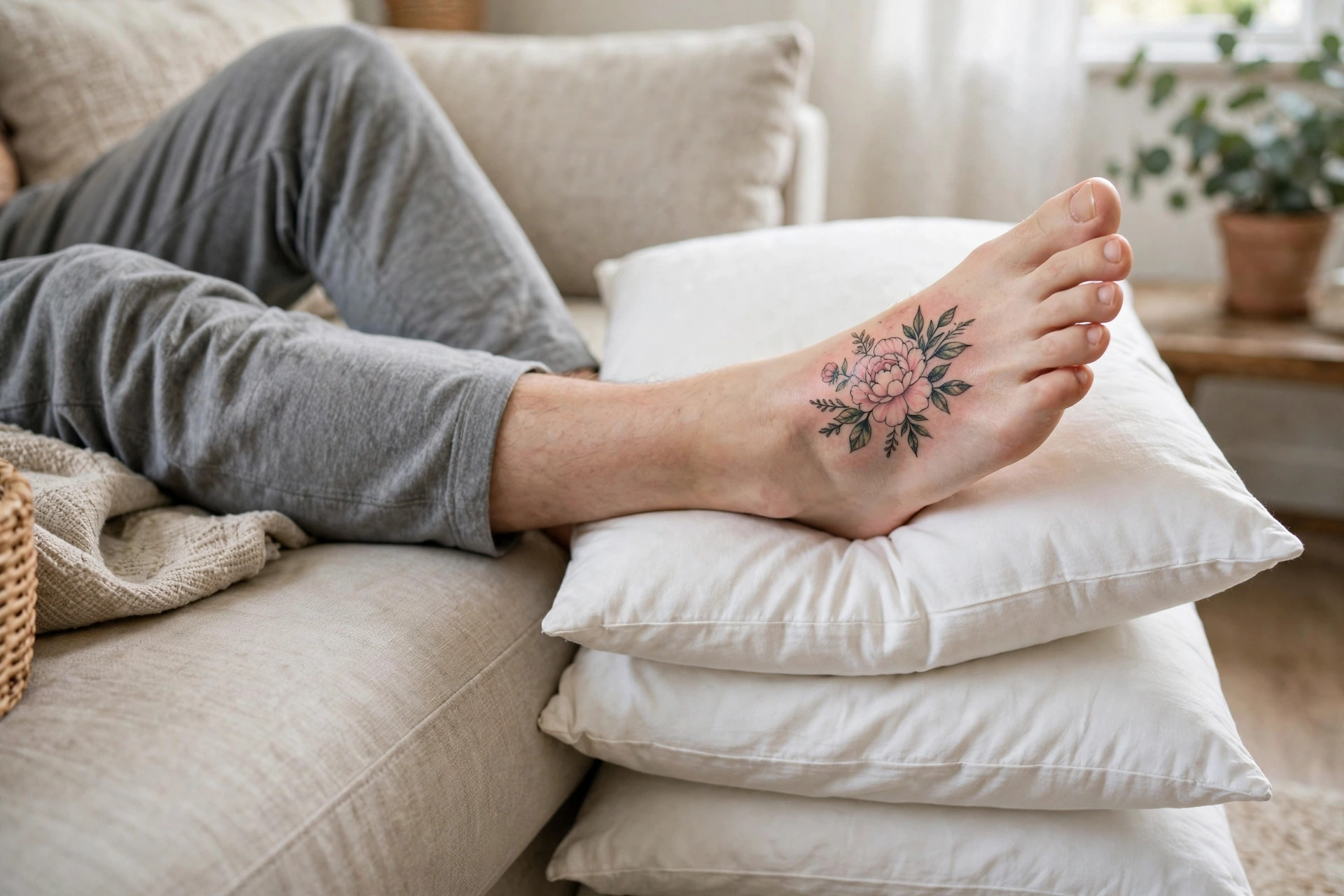
You leave the studio with a foot tattoo you love, and by the next morning your shoe will not go on. The top of your foot looks puffy, the skin feels tight, and every step reminds you the tattoo is there. For feet, that swollen first phase is usually part of healing, not a sign something has gone wrong. What matters is the pattern: normal swelling peaks early and then eases day by day, while problem swelling spreads, heats up, or gets worse after it had started to improve.
Tattoos4Everybody
Swelling is a timeline, not a single moment
Read the general healing guide first, then use this page to judge the swelling itself, day by day.
Key Takeaways
- Some swelling after a foot tattoo is expected, because tattooing breaks the skin and feet sit at the bottom of the body where fluid collects.
- Normal swelling usually starts on the first day, peaks around the second or third day, and then eases a little more each day.
- Elevation is the single most useful habit: a foot raised on pillows, above the level of your heart, drains far better than a foot left hanging down.
- Warning signs are about direction and company: spreading redness, growing heat, pus, red streaks, fever, or swelling that worsens after improving all need prompt attention.
- This page is general information, not medical advice, and it cannot diagnose you; if symptoms worry you, contact your artist and seek medical care.
Table of Contents
- What foot tattoo swelling actually is
- The normal swelling timeline, day by day
- Why feet swell more than other placements
- What normal swelling looks and feels like
- What helps swelling go down
- Warning signs: contact your artist promptly
- Warning signs: seek medical care promptly
- Who should be extra careful
- Our view
- Frequently asked questions
What foot tattoo swelling actually is
Swelling is your body sending fluid and repair cells to skin that has just been worked on. A tattoo is made by passing needles through the surface of the skin again and again, and the body treats that area as an injury that needs protection and rebuilding. Fluid gathers in the tissue, the area looks raised and puffy, and the skin can feel tight over the design. UPMC’s guide to signs a tattoo is infected explains that the immune response to ink entering the skin is what produces the early redness and swelling, and that some swelling in the first phase of healing is a normal reaction rather than a complication.
That distinction matters, because the question with a new foot tattoo is rarely “is it swollen?” Almost every fresh foot tattoo swells. The useful questions are how much, for how long, and in which direction it is moving. The U.S. Food and Drug Administration’s consumer guide to tattoo safety notes that some redness, swelling and warmth can follow a tattoo, and that the warning moment is when the area seems not to be healing, or a rash or fever appears. In other words, swelling on its own is a starting point for watching, not a verdict.
This page stays deliberately narrow: swelling only. The full washing, moisturising and footwear routine lives in foot tattoo aftercare and healing, and this page does not repeat it. MedlinePlus, in its short summary of piercing and tattoo risks, puts infections and allergic reactions at the top of the known risk list, which is why the warning sections of this page are written the way they are. Nothing here replaces your artist’s instructions for your specific piece, and nothing here is a diagnosis.
The normal swelling timeline, day by day
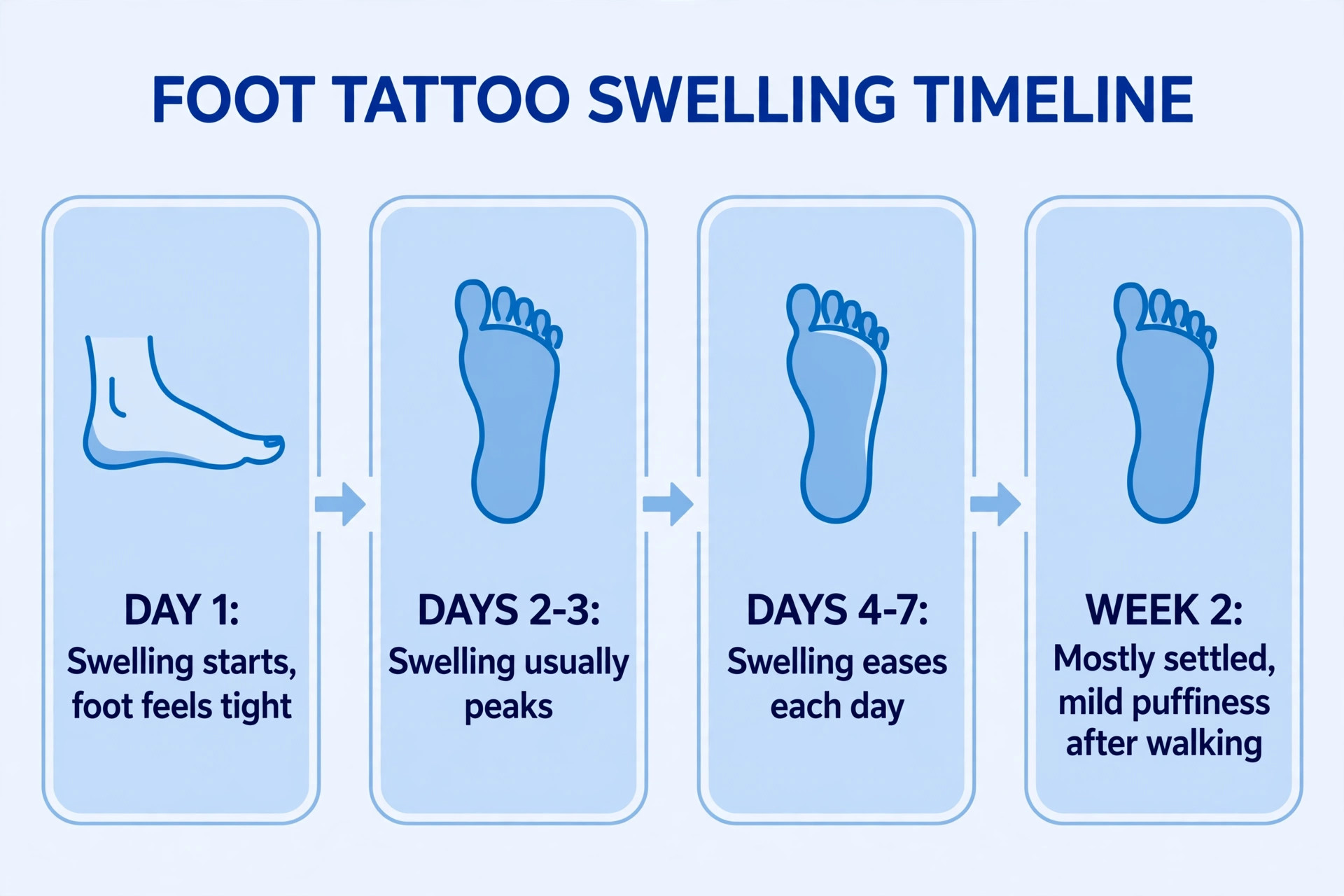
Normal swelling has a shape, and learning that shape is the easiest way to stay calm without going careless. Timelines vary with the size of the piece, how much of the foot it covers, how long the session ran and how much time you spend on your feet, so treat the stages below as a pattern to compare against, not a schedule your body owes you. An NHS leaflet on medical tattooing aftercare gives the same broad shape for tattooed skin in general: slight swelling and redness at first, with symptoms improving over the following days. Feet tend to run slower and puffier than most placements, for reasons covered in the next section.
The first day
On the day of the tattoo and that first evening, swelling builds gradually. The foot may look only slightly fuller when you leave the studio and noticeably puffier by bedtime, especially if you walked home, stood in a queue, or sat with your feet down for hours. The skin over the design often feels tight and warm, and taking a shoe off can be easier than putting one back on. A thin, clear or slightly ink-tinted fluid on the surface in these early hours is part of the picture described for normal early healing, alongside redness and soreness.
Days two and three: the usual peak
For most people this is the high point. The foot looks its puffiest, toes can feel stiff, and the top of the foot may hold the shape of a sock strap or shoe edge pressed into it. This is also the stage where people panic, because the foot often looks worse than it did on the day of the appointment. A peak at this stage, followed by the first small signs of easing, is still the normal pattern. What you are watching for is not whether the foot is swollen on day two. It is whether day four looks any better than day two. Soreness tends to peak on the same schedule, which is why the spot-by-spot account in foot tattoo pain and pain level reads so differently in the first days than it does a week later.
Days four to seven: the easing phase
From around the fourth day, normal swelling gives ground a little at a time. The foot goes down overnight, puffs less after a short walk, and starts fitting into a loose shoe again. Itching and light flaking commonly arrive as the swelling leaves, and the American Academy of Dermatology’s page on caring for tattooed skin treats gentle, ongoing care of the skin as the background habit through this whole healing period. The tattoo may look dull or slightly milky as new skin forms over it. That flat look is about the surface healing, not about the swelling underneath it.
The second week and beyond
By the second week the obvious puffiness should be mostly gone, and this is often the point where people go back to browsing foot tattoo designs and ideas for the next piece instead of watching the current one. though a foot tattoo can still swell mildly after a long day of standing, a long walk, or a hot evening, and then settle again by morning. Mayo Clinic’s guide to tattoo risks and care puts the surface healing of most tattoos at about two weeks, which is a useful outer frame: swelling that is still strong, or still growing, well past that frame deserves a conversation rather than more patience. Deep healing continues under a surface that already looks finished, so an occasional mild puff after heavy use is not the same thing as the early swelling never having left.
Why feet swell more than other placements
Feet lose the fight against gravity all day long, and a fresh tattoo joins that fight at the worst possible moment. MedlinePlus, in its encyclopedia entry on foot, leg and ankle swelling, explains that fluid build-up is most noticeable in the lowest parts of the body because of gravity, and that standing for long periods commonly leaves feet and ankles swollen even with no tattoo involved. Now add a healing wound to the lowest point of that system. Every hour spent standing or sitting with your feet down is an hour in which fluid is being encouraged to collect exactly where your new tattoo is trying to heal.
Walking adds a second pressure. Most placements can be rested without rearranging your whole life. A forearm can sit on a cushion while you work, eat and watch television. A foot cannot be rested that easily, because it is also how you get to the bathroom, the kitchen and the front door. Each step flexes the skin over the design, presses it into a shoe, and pumps more fluid through tissue that is already full. This is why two people with the same design can report very different swelling: the one whose job keeps them seated heals on an easier setting than the one who spends a shift on a hard floor. The placement thinking in foot tattoo placement and stencil considerations makes the same point from the design side: where on the foot a piece sits decides how much movement, footwear pressure and daily wear it has to heal through.
Feet also live inside shoes, which no other common placement has to deal with. A shoe holds warmth and moisture against healing skin, rubs across the top of the foot with every step, and compresses swollen tissue so the swelling has nowhere comfortable to go. The snug fit that felt fine last week can feel like a clamp on a puffy foot. Cleveland Clinic’s overview of edema and fluid build-up describes swelling in exactly these mechanical terms, as fluid trapped in tissue, most often in the feet and legs, which is why the practical fixes in the next sections are mostly about position, pressure and rest rather than products.
What normal swelling looks and feels like
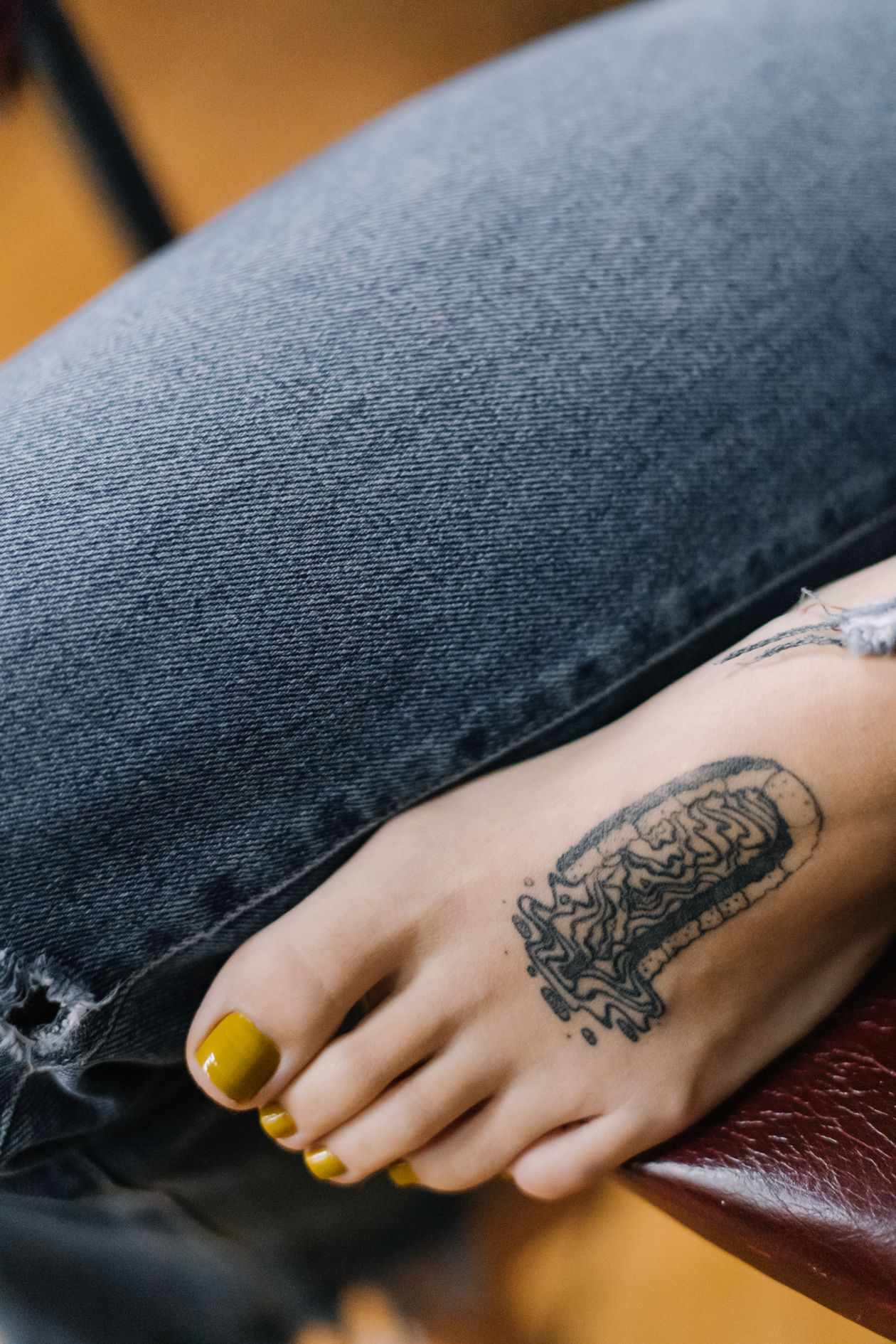
Normal swelling is puffy, tight and tender, and it stays roughly where the tattoo is. The skin over and just around the design looks fuller than the matching spot on your other foot, the lines of the tattoo can look slightly raised, and pressing a fingertip gently beside the design may leave a brief, shallow dent that fills back in. The NHS page on swollen ankles, feet and legs describes this kind of fluid build-up in plain terms: swollen or puffy feet, skin that looks shiny or stretched, and discomfort or stiffness in the area. A healing foot tattoo adds tenderness and a fresh design on top of that same basic picture.
Warmth needs a careful read, because a little of it belongs to the early picture and a lot of it does not. A fresh tattoo often feels slightly warm on the first day or two, the way any worked-on skin does. The FDA’s tattoo safety guidance lists some warmth among the things people may notice after a tattoo, while making clear that an area that is not healing, or that develops a rash or fever, should be raised with the tattooist and a health care professional. Warmth that fades as the days pass fits the normal pattern. Warmth that grows, spreads, or arrives together with spreading redness belongs in the warning sections below.
What helps swelling go down
Elevation does more for a swollen foot tattoo than everything else on this list combined. The principle is simple: fluid drains downhill, so make the foot the uphill end. Lie down and rest the foot on pillows so it sits above the level of your heart, and stay there long enough for it to matter, in proper stretches rather than two-minute gestures. The NHS guidance on things that help cellulitis recovery gives the same instruction for a swollen, infected limb, raising the affected part on a pillow or chair to reduce swelling, and the advice transfers directly to ordinary healing swelling, minus the illness. Cleveland Clinic’s page on managing edema likewise puts elevating the legs and feet at the centre of what you can do yourself to help fluid drain, and MedlinePlus gives the same pillows above the heart instruction for swollen feet and ankles.
Rest the foot, but do not freeze it
The second lever is how much you ask of the foot. In the peak days, keep walks short and purposeful, sit whenever the choice exists, and treat a long standing shift as the thing most likely to set the swelling back by a day. Gentle movement still has a place: easy ankle circles and short, slow walks help fluid move, and the NHS advice for easing swollen legs pairs raising the legs with gentle exercise such as walking to improve blood flow. The balance to strike is movement without load. Strolling around your home is movement. Carrying boxes, training, or walking the dog for an hour in snug shoes is load.
Give the foot room
Footwear can either hold swelling down or squeeze it into a worse mood. In the swollen phase, choose the widest, softest, most open footwear you own, or go barefoot on clean floors at home if your artist’s routine allows it. Tight straps across the top of the foot are the worst offenders, because they press directly on the design and leave a dented line across it. Anyone choosing between the looks gathered in foot tattoos for women and foot tattoos for men should picture the design under a swollen first week, not just in its healed photograph: fine detail can look distorted while the foot is puffy, and that distortion is the swelling, not the tattoo failing.
Keep the background habits steady
Swelling responds to boring consistency. Keep the tattoo clean and cared for exactly as your artist directed, keep your hands washed before touching it, and do not experiment with extra products because the foot looks dramatic. The American Academy of Dermatology’s guidance on caring for tattooed skin is built around that kind of steady, gentle care and around seeing a dermatologist if the skin reacts or changes in a way that concerns you. If you want the full routine rather than the swelling slice of it, it is laid out step by step in foot tattoo aftercare and healing, and this page deliberately leaves it there.
Warning signs: contact your artist promptly
Your artist is the first call for anything that looks off but is not making you ill. Artists see healing feet every week, they know how their own work usually settles, and they can often tell from a clear photograph whether what you are seeing sits inside the normal range for the piece they did. Contact yours promptly if the swelling is not easing at all by the end of the first week, if one patch stays much more swollen than the rest of the design, if the foot swells sharply again after a few calmer days without an obvious cause, or if you are simply unsure and the uncertainty itself is the problem. A short message with your daily photographs beats a long description.
There is also an information reason to notify the artist about any real reaction. The FDA asks people who develop an infection or reaction to notify the tattoo artist as well as seeking care, so the artist can identify the ink involved, note its brand, colour and lot, and avoid using it again while the problem is understood. MedlinePlus makes the matching general point in its summary of piercing and tattoo risks: infections and allergic reactions are among the known risks of tattooing, and following the care instructions and raising problems early is how those risks stay small.
The American Academy of Dermatology’s catalogue of tattoo skin reactions is a useful read before you make that call, because it shows how wide the range of normal and not-normal responses is. What your artist cannot do is diagnose or treat a medical problem, and a good artist will say so. If any sign in the next section is present, the order of calls flips: medical care first, artist informed along the way. Do not let a reassuring reply from anyone, artist, friend or forum, talk you out of being seen when the signs below are in front of you.
Warning signs: seek medical care promptly
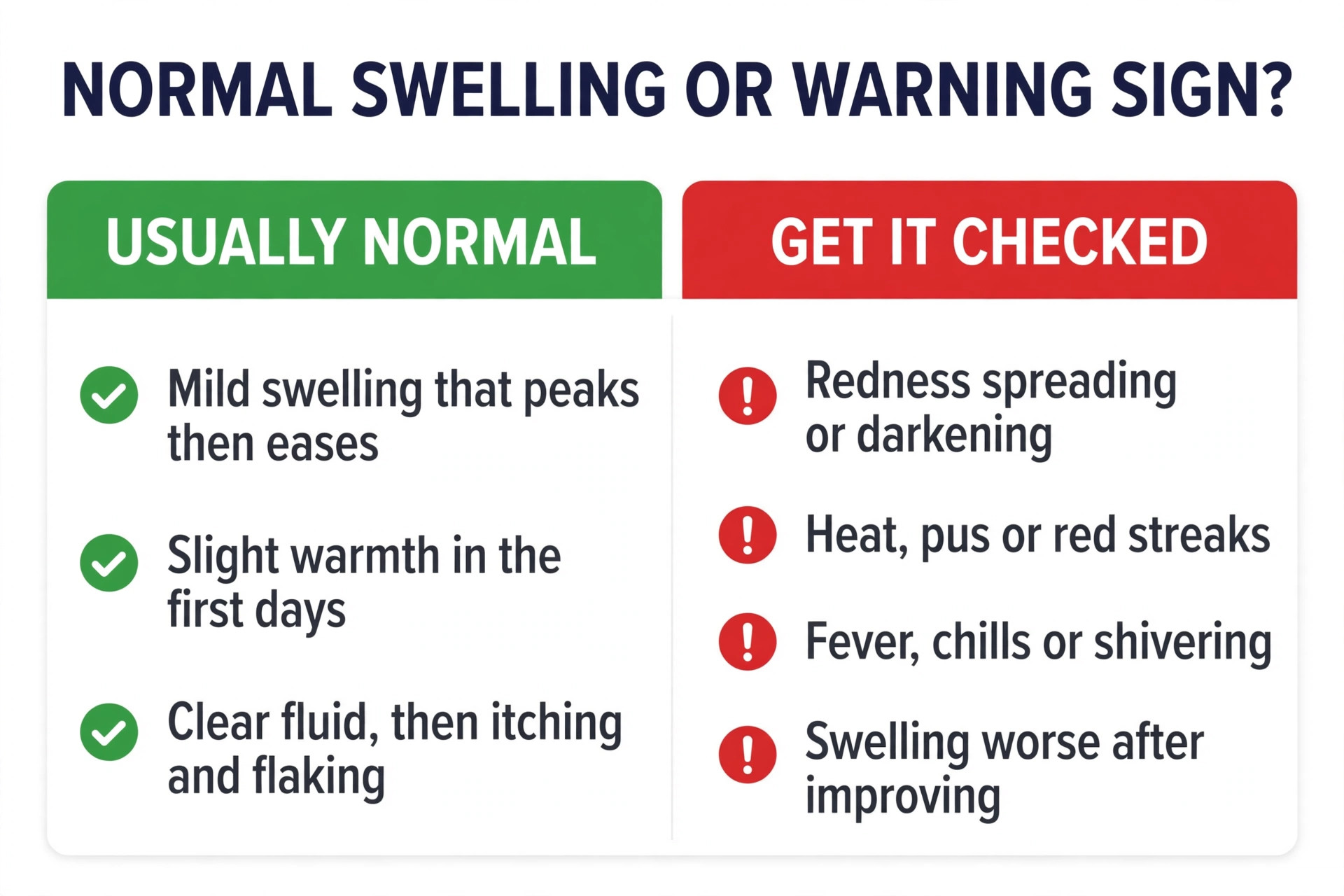
Some signs mean stop watching and get seen, the same day. The American Academy of Dermatology’s page on tattoo skin reactions sets the pattern clearly for infection in a tattoo: redness that becomes darker or spreads instead of lightening, pain that continues or worsens instead of subsiding, a rash of itchy, red, painful bumps in the tattoo, fever, chills and shivering, pus, and open sores, with the advice to see a doctor or dermatologist right away if signs of infection appear. MedlinePlus describes cellulitis in matching terms, as a skin infection whose redness grows as it spreads, with warm skin, swelling and possible drainage. Read that list against a foot and the urgent picture is this:
- Spreading redness. The red area grows beyond the tattoo’s edges, darkens, or sends its border further up the foot or ankle than it reached yesterday.
- Growing heat. The foot feels hot to the back of your hand, clearly hotter than the other foot, and the heat is increasing rather than fading.
- Pus. Thick, cloudy, yellow or green discharge is different from the thin, clear fluid of the first day or two. UPMC’s list of infection signs in a tattoo draws exactly that line, naming pus alongside worsening redness, worsening pain and fever.
- Red streaks. A red line or streak running away from the tattoo, up the foot or leg, is a classic sign that an infection may be spreading through the tissue. MedlinePlus lists red streaks that spread among the developments that mean contacting a provider right away.
- Fever and feeling ill. A temperature, chills, shivering, sweating, or a flu-like unwellness alongside a worsening foot moves the problem from local to whole-body. The NHS page on cellulitis symptoms describes that combination, painful, hot, swollen skin with flu-like symptoms and swollen glands, and advises urgent medical help for it.
- Swelling that worsens after improving. The comeback pattern. Several days of steady easing, then swelling, pain or redness that climbs again. Direction is the diagnosis aid you actually have at home: healing moves one way, trouble moves the other.
Who should be extra careful
Some readers should lower their threshold for getting checked, and know it before the appointment, not after. The NHS lists the factors that raise the risk from cellulitis as including poor circulation in the legs and feet, difficulty moving around, a weakened immune system, and diabetes. Feet are already the slowest healing common placement, and a condition that affects circulation, sensation or immunity removes some of the margin that makes watchful waiting reasonable for everyone else. If you cannot feel the foot well, you also cannot use pain as one of your signals, which makes the visual signs, spreading, heat, discharge, the trend in your photographs, carry the whole job.
If that is you, say so at the booking stage. A good artist will plan the session, the design size and the aftercare conversation around it, and may advise a smaller piece or a different placement altogether. The sizing and positioning trade-offs in foot tattoo placement and stencil considerations are worth a slower read in that situation, and small, meaningful designs such as those in baby feet tattoo ideas show that a foot piece does not have to cover the whole foot to carry its meaning. And when a warning sign appears, skip the artist-first step: go straight to medical care, and inform the artist afterwards.
A final caution belongs to the NHS leaflet on medical tattooing: even in a clinical setting, the instruction for an area that becomes inflamed, moist, red or hot is to contact a medical professional, because infection is the possibility being guarded against. If that is the standard inside a hospital service, it is a sensible standard for a home heal too.
Our view
Most foot tattoo swelling is a fluid problem with a calendar attached: it builds, it peaks, and then, day by day, it leaves. Respect the calendar and you will be calm on the days when calm is correct. The foot that needs help rarely hides it. It spreads, it heats, it leaks the wrong fluid, it makes you ill, or it turns around and gets worse after getting better. Learn those five moves, keep the foot up and the notes short, and you will almost never have to wonder which kind of swelling you are looking at. You will know.
Frequently asked questions
How long does foot tattoo swelling usually last?
The obvious puffiness usually peaks around the second or third day and then eases across the rest of the first week, with mild swelling after long days on your feet sometimes appearing into the second week. Strong swelling that is still building after the first week, or that returns after settling, is outside that pattern and should be raised with your artist or a clinician. Mayo Clinic’s frame for tattoo healing time is the same one used in the timeline above: most tattoos take about two weeks to heal on the surface.
Should I put my swollen foot tattoo in a shoe?
As little as possible during the peak days. Shoes compress swollen tissue, rub the design and hold warmth against it. When a shoe is unavoidable, pick your widest, softest pair, keep the outing short, and take the shoe off and raise the foot when you get back. If a shoe that fit before the tattoo will not go on at all, that is information about the swelling, not a challenge to force it.
Does walking make foot tattoo swelling worse?
Long or loaded walking usually does, temporarily, because the foot is working at the lowest point of the body where fluid collects. Short, gentle movement around the home is different and can help fluid move. Judge by the trend: a foot that puffs after a walk and settles again with elevation is behaving normally, while one that stays worse the next morning has been asked for too much.
When is swelling a sign of infection rather than healing?
When it travels with the warning company: spreading or darkening redness, growing heat, pain that worsens instead of easing, pus, red streaks, or fever and chills. Any one of those alongside swelling that is not settling means seek medical care promptly rather than waiting to see. This page cannot tell you whether your foot is infected; only an in-person assessment can.
What should I tell my artist if I am worried?
When the tattoo was done, when the swelling started, how it has changed day by day, and whether you have any of the warning signs above. Send your dated photographs, taken in the same light, rather than a single picture of the worst moment. That gives the artist something real to judge, and the same record is what a clinician will want if you are referred on.
Is this page medical advice?
No. This page is general information about a common healing question, written to help you recognise patterns and decide who to contact. It does not diagnose any condition and it does not replace your artist’s aftercare instructions or a clinician’s assessment. If symptoms concern you, especially any warning sign listed above, seek medical care.
Keep exploring Tattoos4Everybody
Swelling is one part of the heal. The rest of the foot cluster, designs, pain, placement and aftercare, is waiting on the homepage.
Sources
- tattoo safety — U.S. Food and Drug Administration
- tattoo skin reactions — American Academy of Dermatology
- caring for tattooed skin — American Academy of Dermatology
- cellulitis encyclopedia entry — MedlinePlus Medical Encyclopedia
- piercing and tattoos summary — MedlinePlus
- foot, leg and ankle swelling — MedlinePlus Medical Encyclopedia
- tattoo risks and care — Mayo Clinic
- cellulitis symptoms — NHS
- swollen ankles, feet and legs — NHS
- edema and fluid build-up — Cleveland Clinic
- signs a tattoo is infected — UPMC
- medical tattooing aftercare — NHS, Dudley Group NHS Foundation Trust